The Lord’s Prayer in the Bible, as Found in The Gospels of Matthew and Luke
In the Bible, the Lord’s Prayer can be found in both the Gospel of Matthew and the Gospel of Luke.
To put these sacred Scriptures in their proper context, The Lord’s Prayer is found within a larger set of Scriptures known as The Sermon on the Mount. This Sermon by Jesus Christ, is a set of teachings that begins at the opening of Matthew chapter 5. Christ begins teaching The Beatitudes, which He follows with the teachings of:
- Salt and Light
- The Fulfillment of the Law
- Murder
- Adultery
- Divorce
- Oaths
- Eye for Eye
Conveniently watch video, or scroll down to see details about The Lord’s Prayer
… and chapter five closes with Jesus teaching about Loving Your Enemies.
Jesus then begins chapter six teaching about Giving to the Needy, which is followed by His teaching on Prayer. However, the focus of Christ’s teaching is to be humble when giving and humble while praying.
This becomes evident when He tells His listeners to, “Be careful not to practice your righteousness in front of others to be seen by them.” And when teaching about prayer, Jesus says, “And when you pray, do not keep on babbling like pagans, for they think they will be heard because of their many words.”
Then, just before revealing The Lord’s Prayer, Jesus completes His previous thought about not being like pagans, when stating, “Be not ye therefore like unto them: for your Father knoweth what things ye have need of, before ye ask him. After this manner therefore pray ye..”
The Prayer in Matthew: KJV
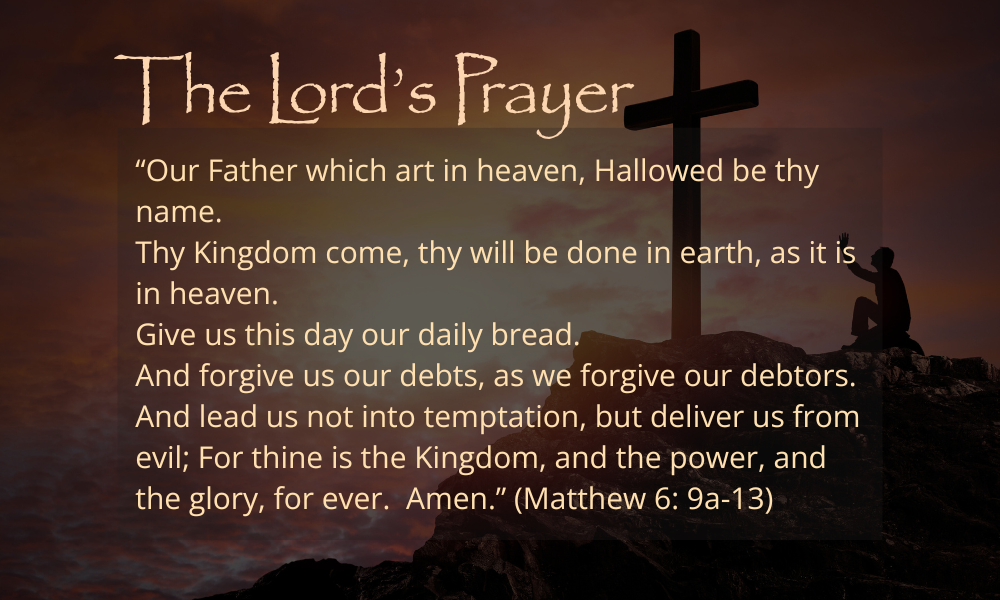
“Our Father which art in heaven, Hallowed be thy name. Thy kingdom come. Thy will be done in earth, as it is in heaven. Give us this day our daily bread. And forgive us our debts, as we forgive our debtors. And lead us not into temptation, but deliver us from evil: For thine is the kingdom, and the power, and the glory, for ever. Amen.” (Matthew 6: 9a-13)
A Brief Analysis:
Pater – Father. Those who have been born again, and so are believers and imitators of their Father.
Hagiazo – Hallowed. Holy. The opposite of common.
Basileia – Concerning the future, where the verb is in the point tense, precluding the notion of gradual progress and development.
Artos – Bread. The necessities for the sustenance of life.
Opheilema – Debt. Metaphorically speaking. Sin as a debt. Because it demands expiation, therefore payment by way of punishment.
Peirasmos – Temptation. Believers are commanded to pray not to be led into various trials by forces beyond their own control.
Poneros – Evil. The adjective, Poneros, is used as a noun, meaning Satan as the evil one.
The Prayer in Luke: KJV
“Our Father which art in heaven, Hallowed be thy name. Thy kingdom come. Thy will be done, as in heaven, so in earth. Give us day by day our daily bread. And forgive us our sins; for we also forgive every one that is indebted to us. And lead us not into temptation; but deliver us from evil.” (Luke 11: 2a-4)
More Popular Verses of the Bible

Genesis 5:2 ""He created them male and female and blessed them. And he named them 'Mankind' when they were created."
Matthew 5:1-12a - (The Beatitudes) 1) Now when Jesus saw the crowds, he went up on a mountainside and sat down. His disciples came to him, 2) and he began to teach them. He said:

(Exodus 20:3) “You shall have no other gods before me." (Exodus 20:4) “You shall not make for yourself an image in the form of anything in heaven above or on the earth beneath or in the waters below. 5 You shall not bow down to them or worship them;

John 3:16 - "For God so loved the world that he gave his one and only Son, that whoever believes in him shall not perish but have eternal life." Chapter 3, verse 16 in the Gospel of John, we find one of..

Discover 20 Old Testament Prophesies about the Birth of Jesus, and the Scriptures in the New Testament Where those Prophesies are Fulfilled.